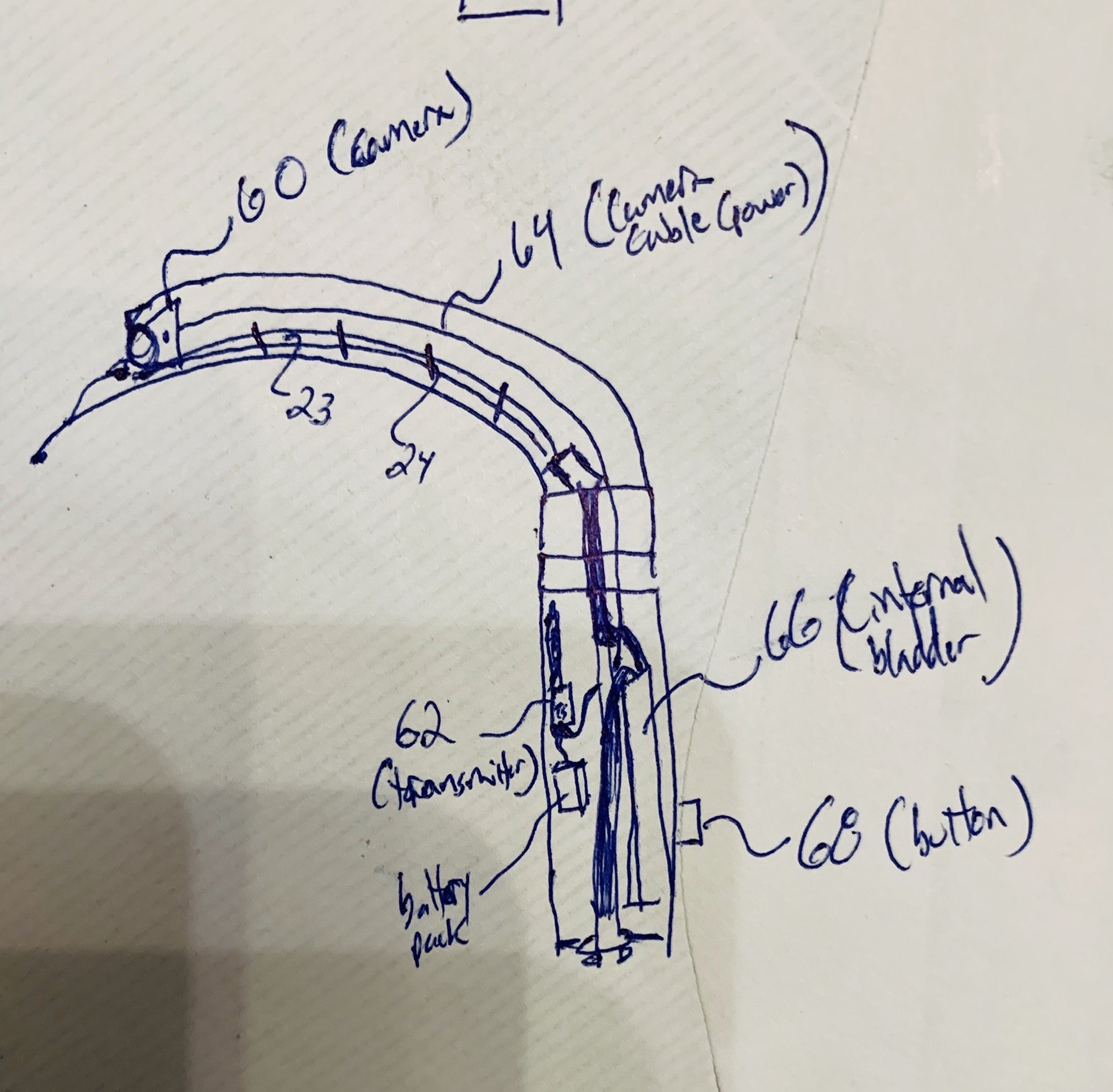
From a pen sketch to a finished blade.
In 2019 I was an ER doc with a pen sketch of a video laryngoscope and no idea how to get a medical device made. No engineering background, no connections, and this was before AI could help with any of it. Here is what it actually took.
Teach yourself CAD
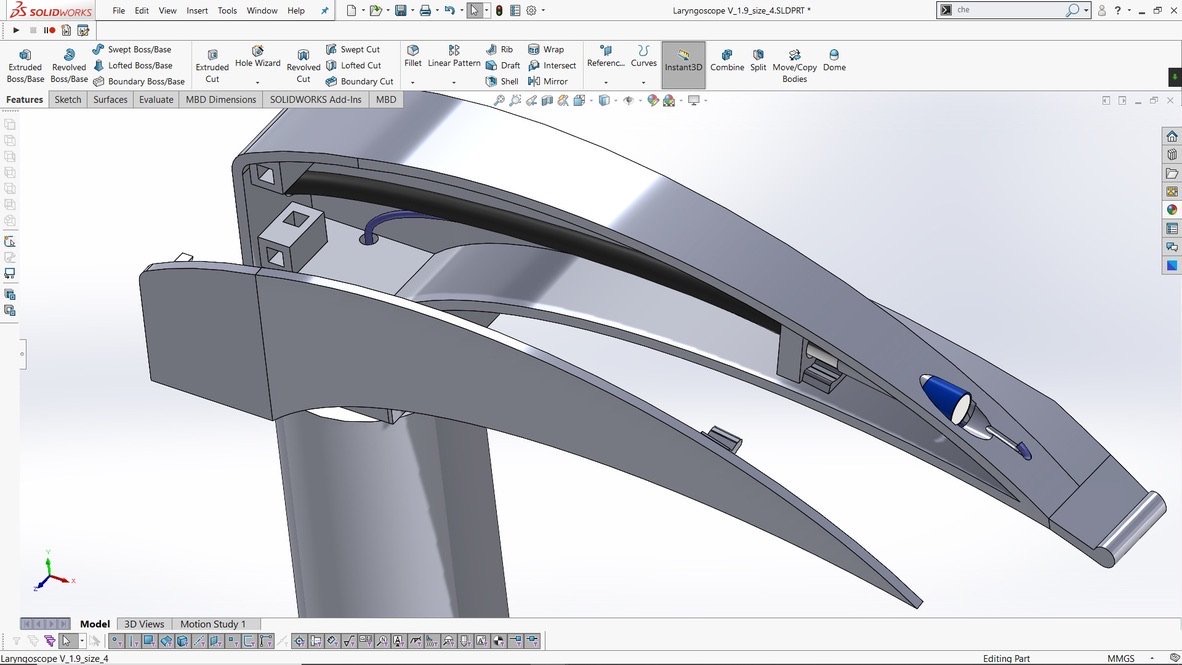
First I taught myself CAD. YouTube, forums, a lot of bad files. I 3D printed blades at home and tested them in an airway manikin, over and over, until the geometry felt right in my hand the way a blade should during a real intubation.
Find someone who can make it
Nobody hands you a list of manufacturers, so I went on ImportYeti and pulled shipping manifests for companies making devices like mine. I built a spreadsheet breaking down which components looked close to what I needed and where they were shipping from. Then I went to the FDA's public device listings and cross referenced them to find contact info for the manufacturing and distribution points.
Then I just started calling. Wrong numbers, getting transferred to someone speaking a language I didn't know, emails that went nowhere for weeks. I slowly narrowed it down to trade-compliant countries and a short list of factories that would actually take me seriously.
Learn what design for manufacturing means
Next I paid real engineers for a formal design review, and that's where I learned what design for manufacturing means. A part that prints perfectly at home can be impossible or way too expensive to mold. Material, cost, wall thickness, and internal fit all fight each other, and you're constantly giving something up.
Get on a plane
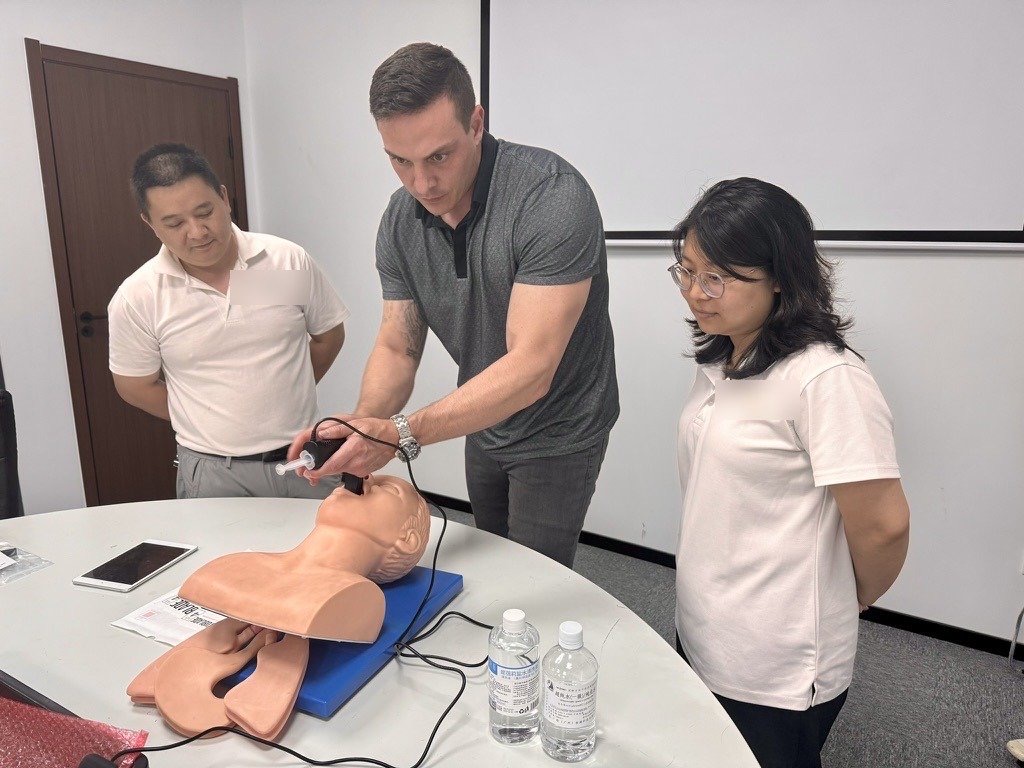
The adult blades took about 18 months of back and forth with files, photos, and calls across time zones. For the pediatric blades I got on a plane, flew overseas, and sat next to their engineer editing the CAD with him for hours. He spoke almost no English and I didn't speak his language, so we pointed at the screen, changed a wall, printed, and tried again. It took about 3 months.
None of it needed permission
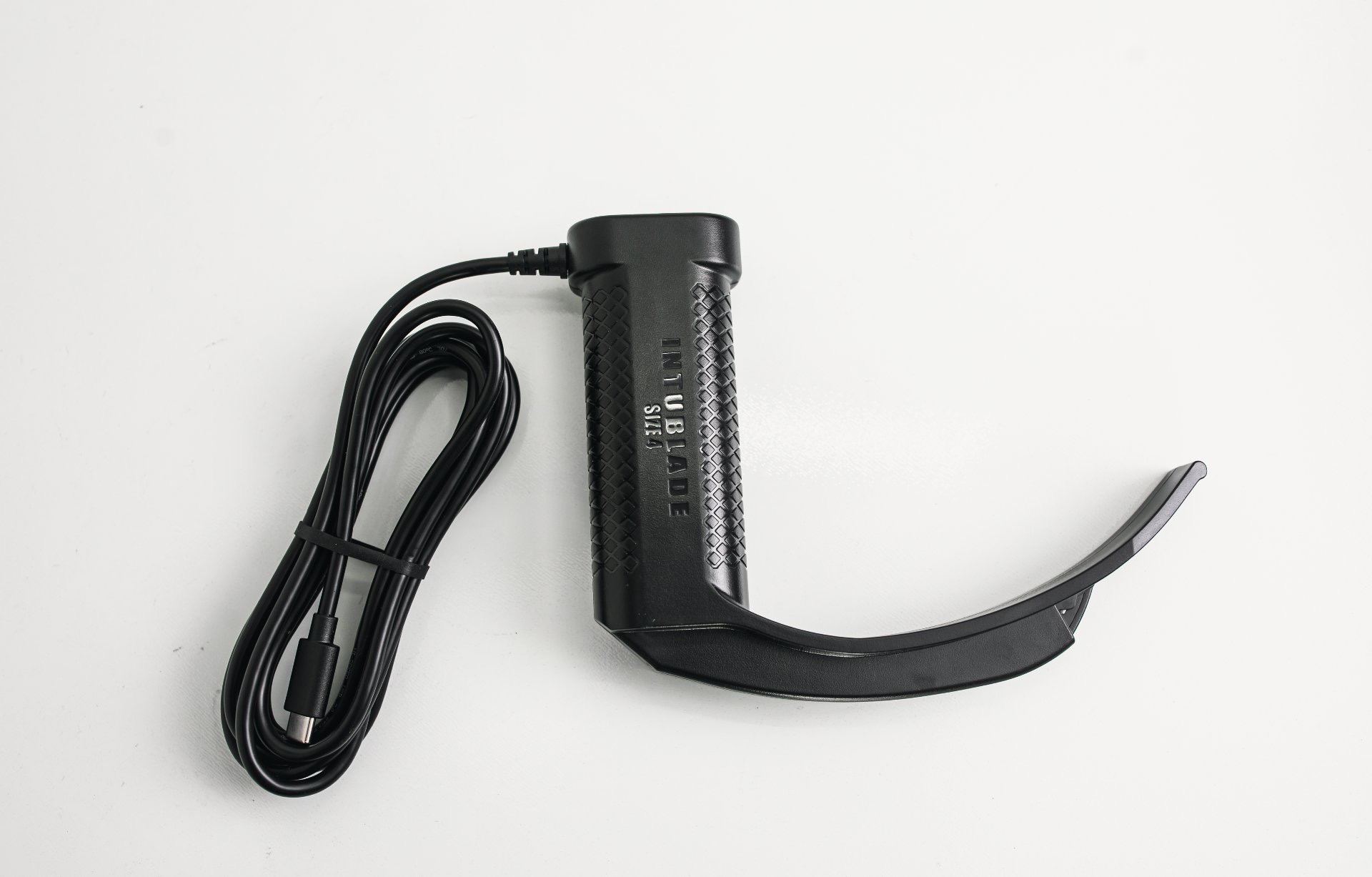
That factory was a long way from my sketch. None of it needed permission. It was public data, a spreadsheet, a lot of phone calls, and being willing to get on a plane.
The sequence
- 2019
Pen sketch of a video laryngoscope. No engineering background, no connections.
- Next
Taught myself CAD. 3D printed blades at home and tested them in an airway manikin.
- Next
Found manufacturers through shipping manifests and FDA public device listings.
- Next
Paid engineers for a formal design review. Learned design for manufacturing.
- ~18 months
Adult blades: files, photos, and calls across time zones.
- ~3 months
Pediatric blades: flew overseas and edited CAD next to the factory engineer.
- Nov 2025
US 12,465,206 issued: Laryngoscope and Methods of Use.
- Jun 2026
US 12,653,393 issued, the fourth patent on the hardware.
- Today
Used by 400+ EMS agencies across 41 states.
Device builders / EMS / airway clinicians